Guide · Women's health
Healthy drinks for women: what to drink, and what to skip
Short answer
The best everyday drinks for women in India are water, chaas or plain milk, and tea or coffee kept an hour away from meals. Cut free sugar first: one 330 mL cola has about 35 g, more than WHO's ideal daily limit. Keep caffeine under 200 mg a day in pregnancy, and protect iron: 57% of Indian women are anaemic.
Which drinks are best for women's health?
| Drink | Why it earns a place | Watch out for |
|---|---|---|
| Water | Zero sugar, zero calories, and enough of it is the base of everything below | Nothing, unless a doctor has limited your fluids |
| Chaas (buttermilk), plain lassi | Calcium and protein for few calories | Sweet lassi is a dessert: sugar adds up |
| Plain milk | Calcium, protein, vitamin B12 | Flavoured milks and "health" powders often add sugar |
| Tea and coffee | Fine in moderation, and they count towards fluids | They block iron if drunk with meals; caffeine limits in pregnancy |
| Coconut water | Potassium, light taste | It has natural sugar; a glass is a snack, not water |
| Fresh fruit juice | Some vitamin C | WHO counts juice sugar as free sugar, the kind to cut |
| Regular soft drinks | None, nutritionally | About 35 g of sugar in a 330 mL can |
| Diet and zero-sugar sodas | No sugar | WHO advises against relying on sweeteners for weight control |
| Caffeinated ("energy") drinks | A measured caffeine dose | Not for pregnancy or breastfeeding; see energy drinks for women |
| Functional drinks (fibre soda, L-carnitine water, HMPA water) | One added ingredient, studied for one job | Check the amount per can, and ask for a lab report |
Sources: WHO sugar guideline, 2015, WHO sweetener guideline, 2023, ICMR-NIN Dietary Guidelines for Indians, 2024. Sugar in a cola is from our healthy soda guide.
Why does tea with meals matter more for women?
Because so many Indian women are short of iron. In the latest national survey, 57% of women aged 15–49 were anaemic, and 52.2% of pregnant women (NFHS-5, 2019–21). Periods lose iron every month, and most iron in an Indian vegetarian plate is the plant kind. Non-haem iron is that plant-food iron, and it's the kind these tea and coffee studies measured.
- of Indian women aged 15–49 are anaemic (NFHS-5)
- 57%
- less iron absorbed from a meal with black tea
- 79–94%
- less iron absorbed from a meal with a cup of coffee
- 39%
- gap between tea or coffee and meals, ICMR advises
- 1 hr
- In a human study, black tea cut iron absorption from a bread meal by 79–94%, and coffee and herbal teas blocked it too; adding milk didn't help (Hurrell et al., 1999).
- Coffee drunk an hour before a meal didn't reduce absorption; coffee an hour after blocked as much as drinking it with the meal (Morck et al., 1983).
- India's 2024 dietary guidelines say to keep tea and coffee an hour away from meals and caffeine under 300 mg a day (ICMR-NIN). For example, have your chai at 11 am rather than with breakfast.
- Vitamin C in the same meal (lemon, amla, guava) counters part of the block from phytates in grains (Hallberg et al., 1989).
- Black tea79–94 % less
- Peppermint tea84 % less
- Cocoa71 % less
- Chamomile tea47 % less
Iron absorbed from a bread meal, compared with the same meal and water, in adult volunteers (Hurrell et al., 1999). Adding milk didn't change it.
How much sugar is too much in a drink?
Free sugars are the sugars added to food and drink, plus the sugar naturally in honey, syrups and fruit juice. WHO's guideline is to keep them under 10% of daily energy, and ideally under 5%: about 25 g a day (WHO, 2015). A regular 330 mL cola carries about 35 g, so a single can is past the ideal limit before breakfast.
Zero-sugar drinks fix the sugar, not the habit. WHO's 2023 guideline advises against using non-sugar sweeteners to control weight, because long-term trials don't show they help (WHO, 2023). Water, chaas and unsweetened tea remain the default.
How much caffeine can women have in a day?
| Who | Daily limit | Source |
|---|---|---|
| Healthy adult women | Up to 400 mg a day; up to 200 mg at once | EFSA, 2015 |
| Pregnant women | Up to 200 mg a day, from all sources | EFSA, 2015 |
| Breastfeeding women | Up to 200 mg a day | EFSA, 2015 |
| Adults in India | Under 300 mg a day | ICMR-NIN, 2024 |
Sources: EFSA scientific opinion on caffeine, ICMR-NIN Dietary Guidelines for Indians. Indian caffeinated drinks are capped at 300 mg per litre, about 99 mg in a 330 mL can; the full breakdown is in energy drinks for women.
What should women drink at each stage of life?
- During your period: water first; cold drinks don't change your flow, despite the myth. See what to drink during periods and period bloating.
- With PCOS (now called PMOS): cut liquid sugar first, eat more fibre, and be sceptical of "PCOS drinks". See drinks for PCOS.
- Pregnant or breastfeeding: keep caffeine under 200 mg a day, skip caffeinated drinks labelled "not recommended for pregnant or lactating women", and don't start a supplement (L-carnitine included) without your doctor.
- At the gym: L-carnitine is studied for recovery and modest fat loss. See L-carnitine for women.
- From your 40s: belly fat shifts inward around menopause; drinks matter less than movement there. See hormonal belly.
Where do Get Waisted's three cans fit?
We make three canned drinks, and none of them contains caffeine. We don't claim any of them treats anything. Here is what each one is, for a woman reading the label:
| Can | What's in it | What the evidence says for women |
|---|---|---|
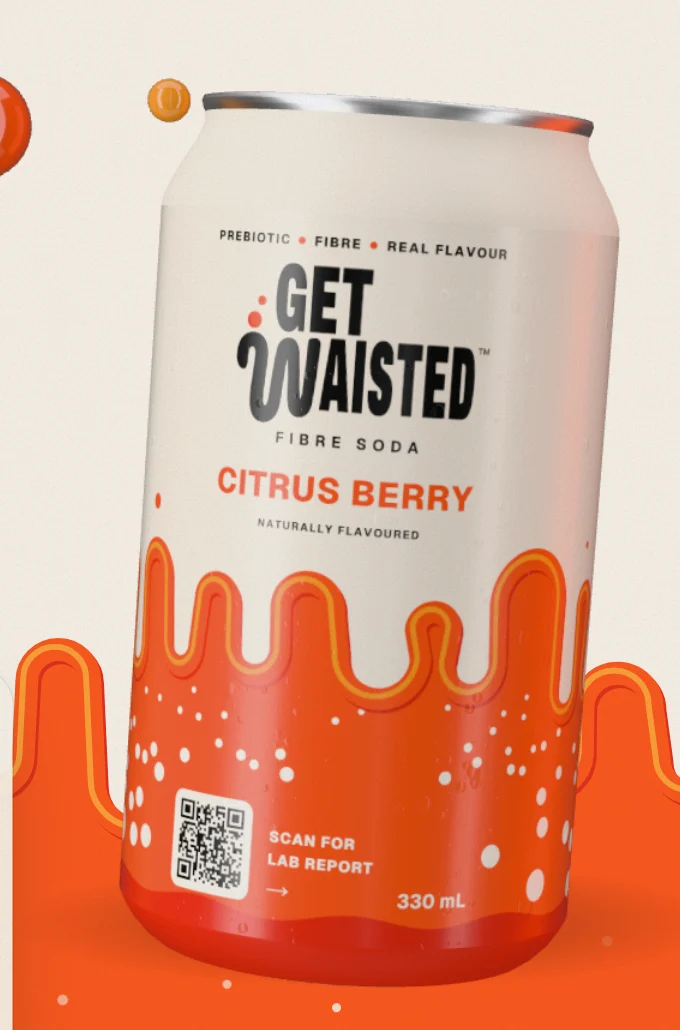
| Fibre Soda | Target 6 g fibre (mostly guar fibre, PHGG), under 5 g sugar, about 30 kcal, no caffeine | Women with PCOS ate less fibre than women without it in one cohort; fibre is the gap most diets have |
| L-Carnitine Water | Water and L-carnitine (amount set with the lab, printed on the can) | Modest fat loss in trials that included women; PCOS evidence is low to moderate; not for pregnancy or thyroid problems without a doctor |
| HMPA Water | Water and HMPA, target 23 mg | No HMPA study has reported results for women separately; the research is mostly in mice |
Questions people ask
What is the best health drink for women in India?
Water, then low-sugar drinks with something useful in them: chaas, plain milk, unsweetened tea or coffee kept an hour away from meals. Most packaged "women's health drinks" are powders with added sugar; read the label for sugar per serving first.
Which drink is good for women's health every day?
Water. After that, chaas or plain milk for calcium and protein. Tea and coffee are fine in moderation, but keep them an hour away from meals, because they block iron absorption and 57% of Indian women are anaemic.
Is tea bad for women?
No, but timing matters. Black tea drunk with a meal cut iron absorption by 79–94% in a human study, and ICMR advises keeping tea and coffee an hour away from meals. Keep total caffeine under 300 mg a day, or 200 mg in pregnancy.
What should women drink for weight loss?
Swap sugary drinks for water first: a cola a day is about 35 g of sugar and 140 kcal. No drink burns fat on its own; the measurable win from any drink is the sugar and calories it replaces.
Is coconut water good for women?
Yes, as a drink, not as water: it has potassium and a light taste, but also natural sugar. One glass is fine; it doesn't replace plain water through the day.
What is a good health drink for women over 40?
The same base: water, plain milk or chaas for calcium and protein, and less sugar. Around menopause, belly fat shifts inward; exercise moves that more than any drink does.
Can women drink energy drinks?
Healthy adult women can have up to 400 mg of caffeine a day, but pregnant or breastfeeding women should stay under 200 mg and avoid caffeinated drinks, whose Indian labels say they're not recommended for them.
Are Get Waisted drinks made for women?
They're made for anyone, and none has caffeine. We wrote these guides because women ask different questions: about PCOS, periods, iron and pregnancy. Every can has a QR code that opens its batch lab report.
Sources
- 01Ministry of Health and Family Welfare: National Family Health Survey (NFHS-5), 2019–21, India fact sheet.Government (India)
- 02Hurrell R.F., Reddy M., Cook J.D. (1999). Inhibition of non-haem iron absorption in man by polyphenolic-containing beverages. British Journal of Nutrition 81(4):289–295.Peer-reviewed · humans
- 03Morck T.A., Lynch S.R., Cook J.D. (1983). Inhibition of food iron absorption by coffee. American Journal of Clinical Nutrition 37(3):416–420.Peer-reviewed · humans
- 04Hallberg L., Brune M., Rossander L. (1989). Iron absorption in man: ascorbic acid and dose-dependent inhibition by phytate. American Journal of Clinical Nutrition 49(1):140–144.Peer-reviewed · humans
- 05ICMR-National Institute of Nutrition (2024). Dietary Guidelines for Indians (tea and coffee: caffeine under 300 mg a day, not within an hour of meals).Government (India)
- 06World Health Organization (2015). Guideline: sugars intake for adults and children.WHO guideline
- 07World Health Organization (2023). Use of non-sugar sweeteners: WHO guideline.WHO guideline
- 08EFSA Panel on Dietetic Products, Nutrition and Allergies (2015). Scientific opinion on the safety of caffeine. EFSA Journal 13(5):4102.Food safety authority (EU)
- 09Cutler D.A., Pride S.M., Cheung A.P. (2019). Low intakes of dietary fiber and magnesium are associated with insulin resistance and hyperandrogenism in polycystic ovary syndrome: a cohort study. Food Science & Nutrition 7(4):1426–1437.Peer-reviewed · 137 women
- 10Talenezhad et al. (2020). Effects of L-carnitine supplementation on weight loss and body composition: a systematic review and dose-response meta-analysis of 37 randomized controlled clinical trials. Clinical Nutrition ESPEN 37:9–23.Peer-reviewed · meta-analysis · humans
- 11Mohd Shukri M.F. et al. (2022). Effects of L-carnitine supplementation for women with polycystic ovary syndrome: a systematic review and meta-analysis. PeerJ 10:e13992.Peer-reviewed · meta-analysis · 9 studies, 995 women
Keep reading
- गाइड · महिलाओं की सेहतमहिलाओं के लिए हेल्दी ड्रिंक: क्या पिएँ, क्या छोड़ेंभारत में महिलाओं के लिए रोज़ के सबसे अच्छे ड्रिंक: पानी, छाछ, दूध, आयरन बचाने के लिए चाय कब पिएँ, चीनी और कैफ़ीन की सीमा, PCOS, पीरियड्स और प्रेग्नेंसी।→
- Guide · PCOS / PMOSDrinks for PCOS: what helps, and what to avoidPCOS is now PMOS. Which drinks help PCOS weight loss and which to avoid: spearmint tea, inositol sachets, L-carnitine, coffee, diet soda and methi water.→
- Guide · PeriodsWhat to drink during your period (and the cold drink myth)Can you have cold drinks, soda or coffee on your period? What studies show on water, caffeine, ginger and iron, and what actually helps cramps.→
Get Waisted · three cans
Report first. Can second.
HMPA Water, L-Carnitine Water and Fibre Soda: no caffeine in any of them, and a lab report for every batch. Reserve a pack free and get the first reports before they go on sale.